Ask how long it takes to get a contract signed and you will usually hear "about three weeks". Ask how many of those three weeks were spent actually working on the contract, and the answer is a couple of hours.
The rest is waiting. Waiting for a review, an approval, a signature, someone on holiday. Automation is therefore rarely about drafting faster. It is about removing waiting time.
The six stages
Nearly every contract process looks like this, whether or not you have written it down:
- Request: someone needs a contract
- Drafting: a draft comes together
- Review: legal, finance or a manager looks at it
- Approval: someone with authority says yes
- Signature: both parties sign
- Management: the contract enters the register and gets monitored
Each stage has a different kind of delay. And each one calls for a different fix.
Stages 1 and 2: request and drafting
Where time leaks away: the request arrives as an email or a chat message, without the details needed to draft anything. Three days of back and forth follow about the term, the counterparty and the amount.
What helps: one fixed entry point that asks for the required fields up front. Not a form for the sake of a form, but the five things you always need: who, what, how long, how much, and when it has to be ready.
For recurring contract types, a template saves the most on top of that. A standard NDA or engagement letter does not need to be rebuilt every time.
Count how many of your contracts in a year are of the same type. In most organisations, eighty percent comes down to five or six shapes. Standardising those five delivers more than all the other stages combined.
Stages 3 and 4: review and approval
This is where most of the cycle time sits, and where automation has the biggest effect.
Where time leaks away: a draft goes out as an attachment to three people. Two respond, one forgets. Three versions come back with comments in different documents. Nobody knows which version is current.
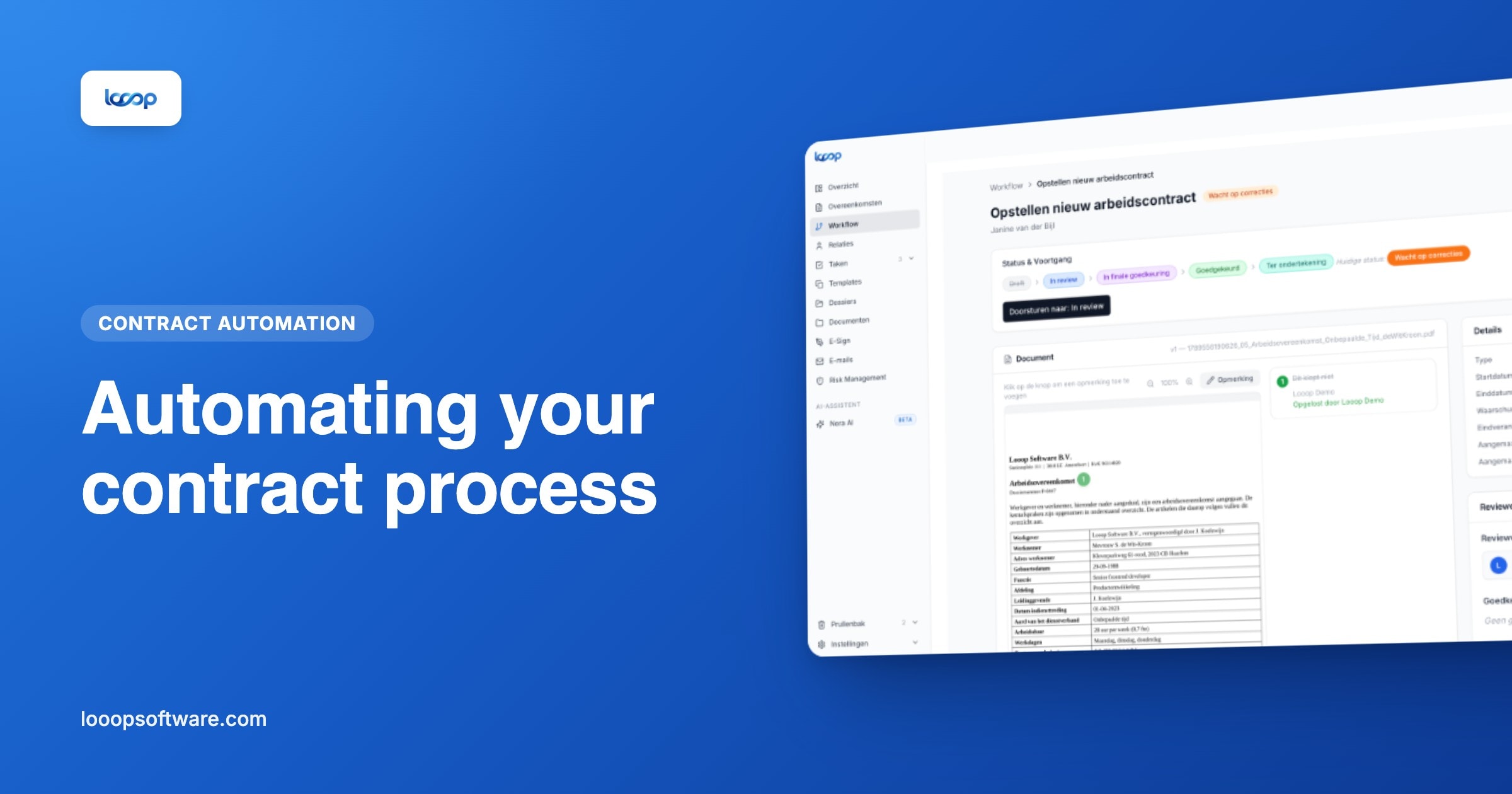
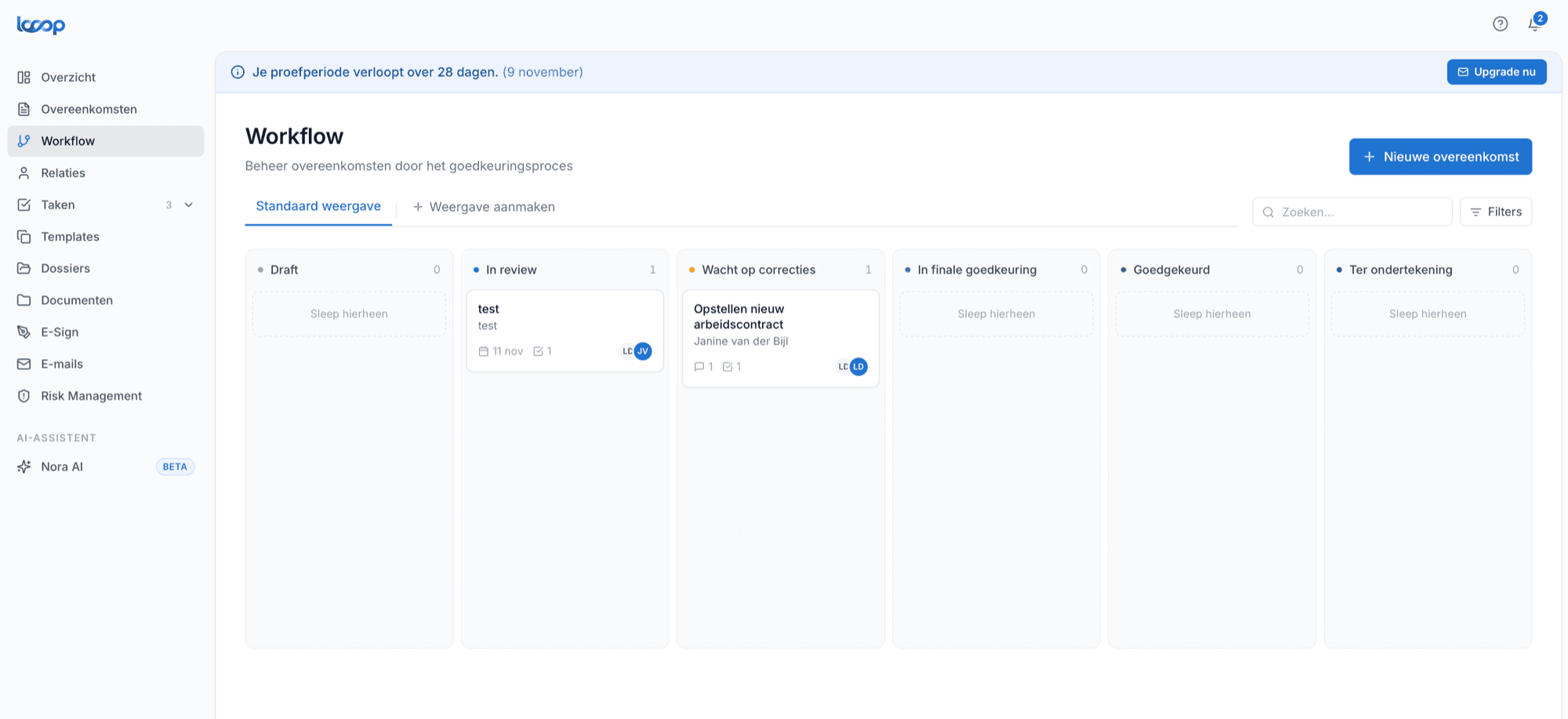
What helps: a fixed route past the right people, with comments in the document itself rather than in separate emails. An approval workflow makes visible who still has to act, so you know who to chase.
Three design rules that work in practice:
- Parallel where you can, sequential where you must. Legal and finance can usually look at the same time. Only the final approval is genuinely sequential.
- Decide who needs to be involved, and when. Not every €500 contract needs the board. Set thresholds.
- Make silence visible. A review sitting idle for four days should stand out, not disappear.
Stage 5: signature
Where time leaks away: printing, signing, scanning, emailing. Or a separate signing platform the document goes to, where the signed copy then stays.
What helps: digital signing inside the same environment where the contract is managed. Automatic reminders to whoever has not signed yet, and the signed document landing straight on the contract record.
Stage 6: management
This is the stage most often skipped, and where the largest costs arise.
Where time leaks away: nowhere, and that is exactly the problem. The contract is signed, everyone is happy, and the document disappears into a folder. Two years later it renews itself silently.
What helps: the contract goes straight into the register, with its term, notice period and owner. Expiry alerts and tasks do the rest.
Where to start
Not with technology. Start by measuring where your time goes:
- How many contracts do you sign per month, and of which types?
- How many days pass between request and signature?
- Which stage holds the longest waiting time?
- How many versions go back and forth before signing?
- Who needs to review, and above which amount?
- What happens to the contract after it is signed?
That third question decides where you begin. If the delay sits in review, a workflow is your biggest win. If it sits in drafting, templates are the answer. If it sits after signature, you do not have a process problem but a register problem.
What automation does not solve
Being honest here helps. Automation speeds up a process you already understand. It does not fix:
- Unclear authority. If nobody knows who may sign, a workflow will not decide it for you.
- Negotiation. A discussion about liability takes as long as it takes.
- Bad terms. A contract with an unworkable clause does not improve because it was signed faster.
What you may reasonably expect: less back and forth, visibility of where things are stuck, and a contract that does not vanish once it is signed.
Further reading
Frequently asked questions
- How do you automate the contract process?
- Start with waiting time, not technology. Measure at each stage where contracts get stuck. If it's review, an approval workflow helps most; if it's drafting, templates; if it's after signing, a register with alerts.
- What are the stages of a contract process?
- Six: request, drafting, review, approval, signature and management. Most of the lead time sits in review and approval. The biggest costs arise in management, when a signed contract disappears into a folder and renews automatically.
- How many contracts can you standardise with templates?
- In most organisations, around eighty percent of contracts can be reduced to five or six forms. Standardising those often delivers more than all other steps combined.