There are two ways an approval process fails, and they look like opposites.
The first: too strict. Every contract has to pass legal, finance and the managing director. Result: people route around it. The contract gets signed and only then "briefly aligned".
The second: too loose. Whoever drafts the contract also signs it. Result: nobody notices the liability clause you did not want.
The skill is finding the middle: enough control on what matters, and none on the rest.
Decide what you are actually steering on
An approval workflow is not about contracts, it is about risk. Three questions decide who needs to be involved:
| Question | What it determines |
|---|---|
| How much money is involved? | Whether finance and the board need to review |
| How much legal risk does it carry? | Whether legal needs to look at it |
| How long are we committed? | Whether someone with authority must sign |
An NDA worth nothing can carry real legal risk. A €50,000 purchase on standard terms may not. So do not steer on amount alone.
Work with thresholds, not exceptions
The pattern that works best in practice:
- Below amount X: the contract owner signs, no review
- Above X: finance reviews term, value and indexation
- Any deviation from your standard terms: always past legal
- Above amount Y or longer than Z years: approval by someone with authority
- Processing of personal data: always with a data processing agreement
- Renewal of an existing contract: a lighter route than a new contract
That last point is often forgotten. A renewal on unchanged terms does not need the same route as a new contract. Make that explicit, or you create an incentive to let renewals slide quietly, which is exactly what you do not want.
Parallel where you can
Most workflows are unnecessarily sequential: first legal, then finance, then the director. Yet legal and finance look at different things and do not need each other.
Let them review at the same time. Only the final approval is genuinely sequential, because it builds on the rest. With three reviewers taking two days each, that saves four days of cycle time.
After a quarter, look back: which reviewer actually changed something? A reviewer who made zero amendments across thirty contracts is probably in the wrong route.
The one-person bottleneck
Every organisation has one: the person where everything stalls because they have to sign every contract.
Three ways to fix it, in order of preference:
- Raise the threshold. If someone signs a hundred contracts a year and rejects none, the threshold is too low.
- Arrange deputies. Record who signs in their absence. Without that agreement, everything stops the week they are away.
- Make waiting time visible. A contract sitting on one desk for five days should stand out.
What you do in the document itself
The biggest time loss in reviews does not come from reviewing, but from finding what was reviewed. Three versions with comments in three emails produce a fourth version where someone merges it all by hand.
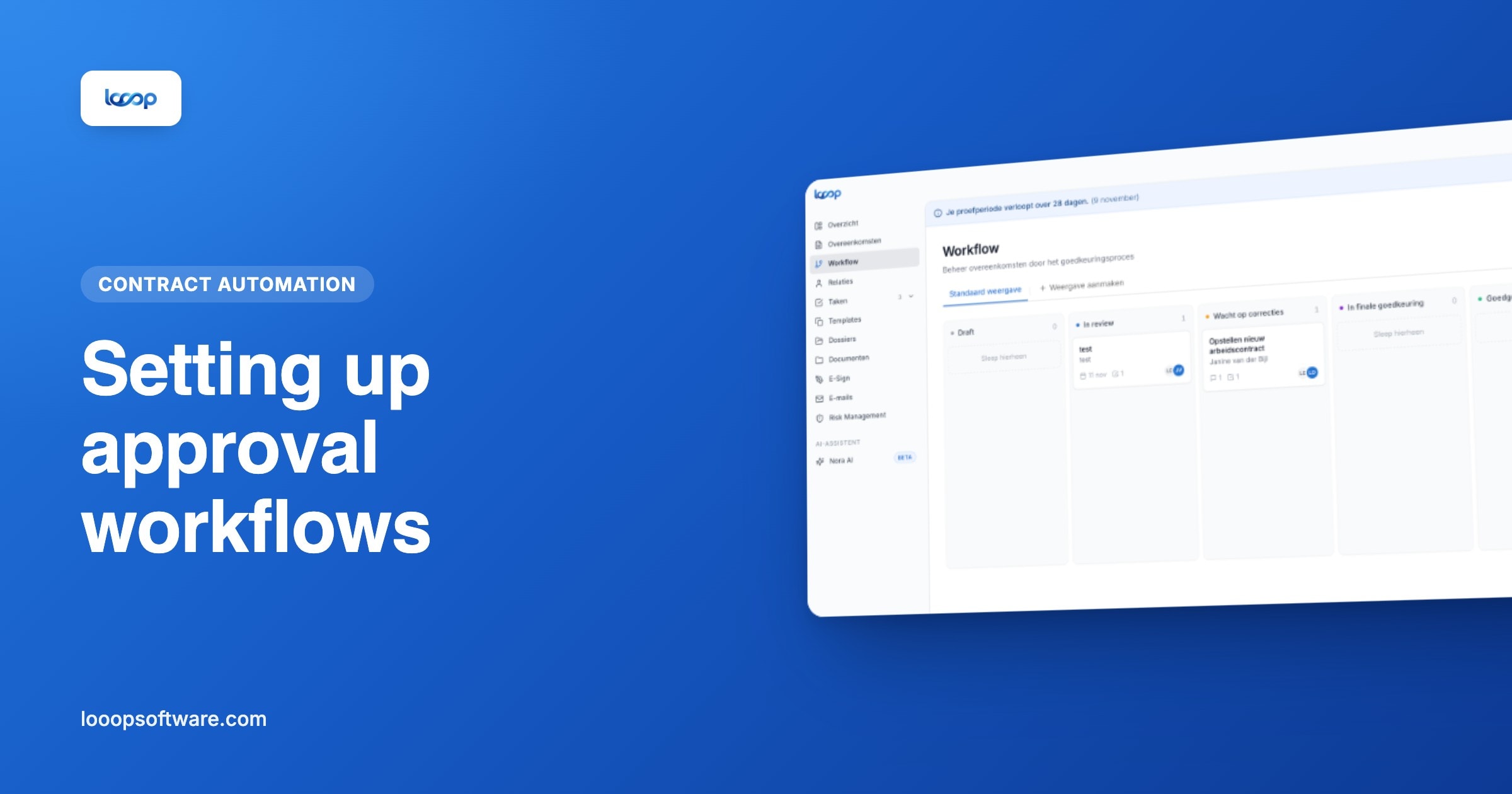
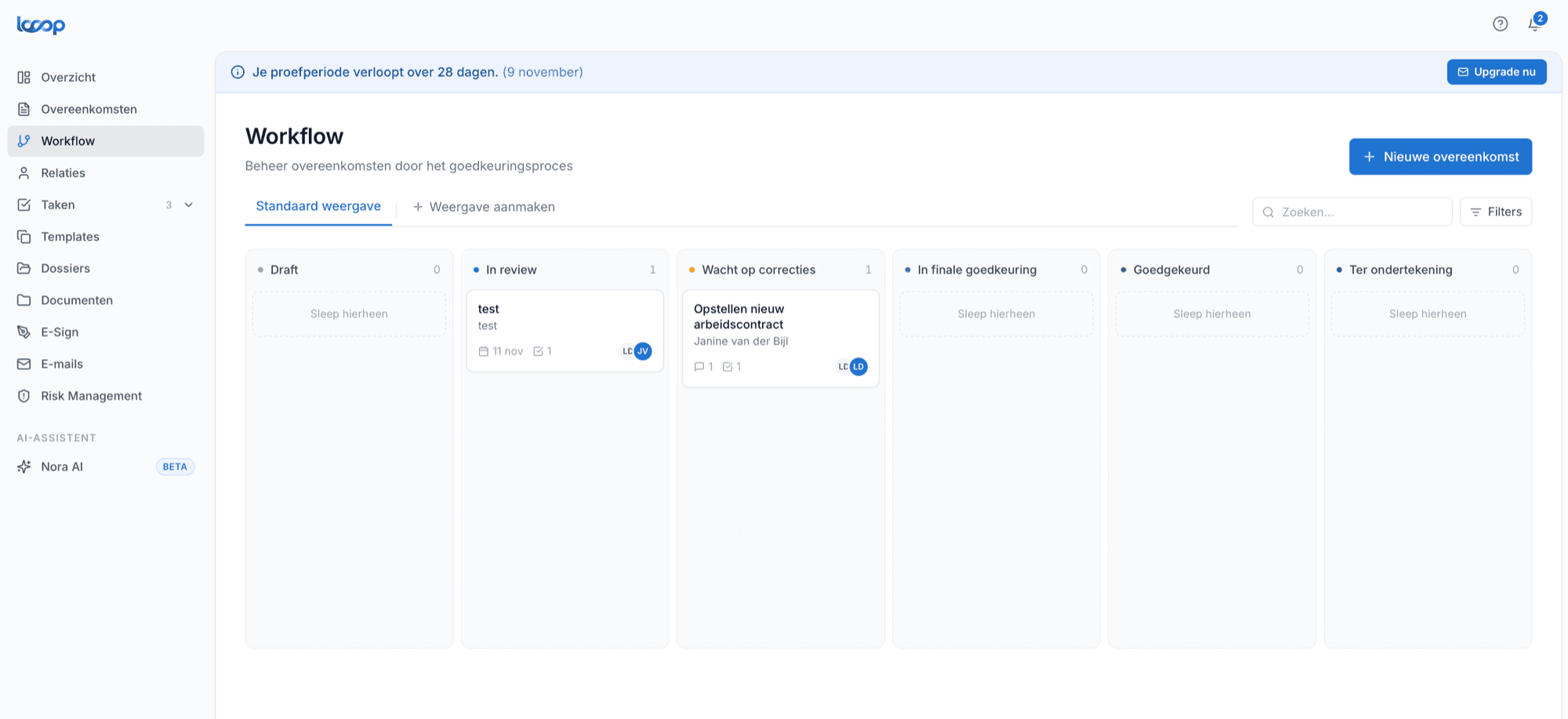
In Looop you place comments in the document itself, during the review. Everyone looks at the same version, and you can see who still has to act. That removes the merge round entirely.
Around that:
- Tasks with an owner and a deadline for whatever still has to happen after approval
- Permissions per role so a reviewer sees exactly what they should, per department or contract type
- E-signature directly after approval, without switching tools
- Reporting to see how many contracts sit in which stage
For legal teams, this page shows how it connects to the rest of the process.
Write it down, even if it is small
A workflow that exists only in someone's head is not a workflow. Record:
- Which contract types follow which route
- Which amounts require which approval
- Who deputises during absence
- What happens when a reviewer does not respond
- Who may deviate from the route, and how that gets recorded
That last point matters more than it looks. There is always an urgent case. Without an agreed exception route, the whole workflow gets ignored at the first urgent case, and never picked up again.
Further reading
Frequently asked questions
- How do you set up an approval workflow for contracts?
- Steer on risk, not just on amount: value, legal risk and duration determine who needs to review. Work with thresholds, let reviewers work in parallel where possible, and record who stands in when someone is away.
- Should reviewers work one after another or at the same time?
- At the same time where possible. Legal and finance look at different things and don't need each other; only final approval is truly sequential. With three reviewers taking two days each, that saves four days.
- What if every contract gets stuck with one person?
- Raise the threshold if that person rejects almost nothing, arrange a stand-in for absences, and make waiting time visible so a contract that sits for days stands out.