"We already have a CRM, why would we need another system for contracts?" It's a question we hear often, and an understandable one. But a CRM and a CLM (Contract Lifecycle Management system) solve a fundamentally different problem. Anyone who thinks a CRM also covers the contract process finds out otherwise sooner or later.
What a CRM does well
A CRM like HubSpot, Pipedrive, Salesforce, Exact or AFAS is built to manage relationships and the sales pipeline: following up leads, moving deals through a pipeline, logging customer contact, sending quotes. These systems are strong at that, and that's not going to change, Looop isn't here to replace it.
What a CRM doesn't do, and where it costs you
The problem starts the moment a deal is won and a contract gets signed. From that point on, the document often disappears into a loose folder, a CRM attachment, or a shared drive, and that's where your system's "intelligence" stops.
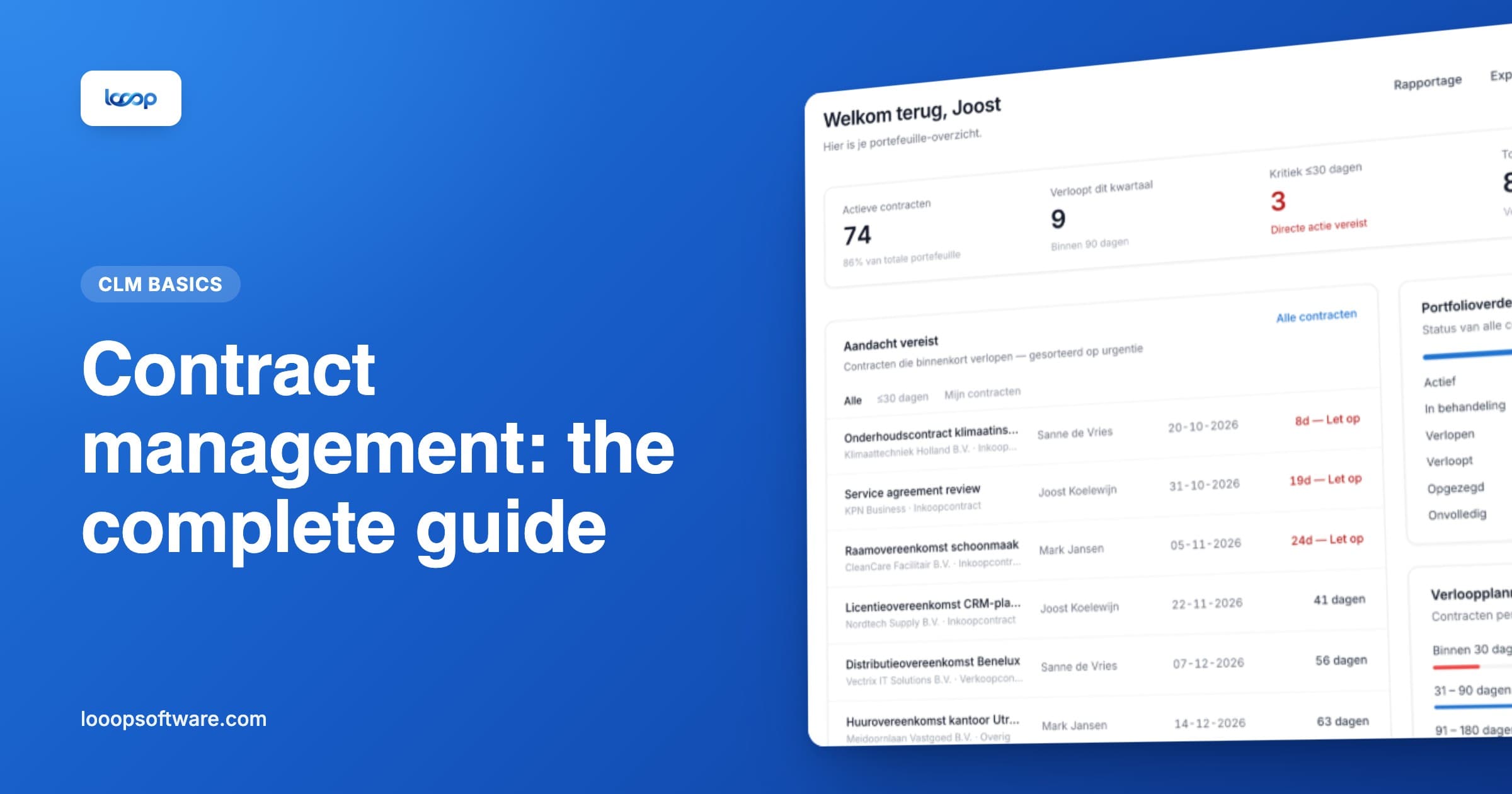
- No tracking of notice periods or expiry dates, a CRM won't alert you that a contract auto-renews in 60 days
- No AI that reads your contracts, a CRM sees a PDF attachment, not the parties, terms or obligations inside it
- No automatic tasks at expiry, nobody gets triggered to renew, renegotiate or terminate on time
- No central overview of active obligations, you search manually through folders and email threads whenever you need a contract
The result is familiar: a notice period that slips by unnoticed, a contract that silently renews for another year when you actually wanted to renegotiate, or hours spent searching for the right version of a contract.
Two systems, one workflow
The solution isn't to trade in your CRM for a CLM, it's to let them work alongside each other. Your CRM stays the source of truth for customer relationships and the sales pipeline. The moment a deal is won, Looop takes over everything related to the contract itself: drafting, signing, monitoring, and acting in time on renewal or termination.
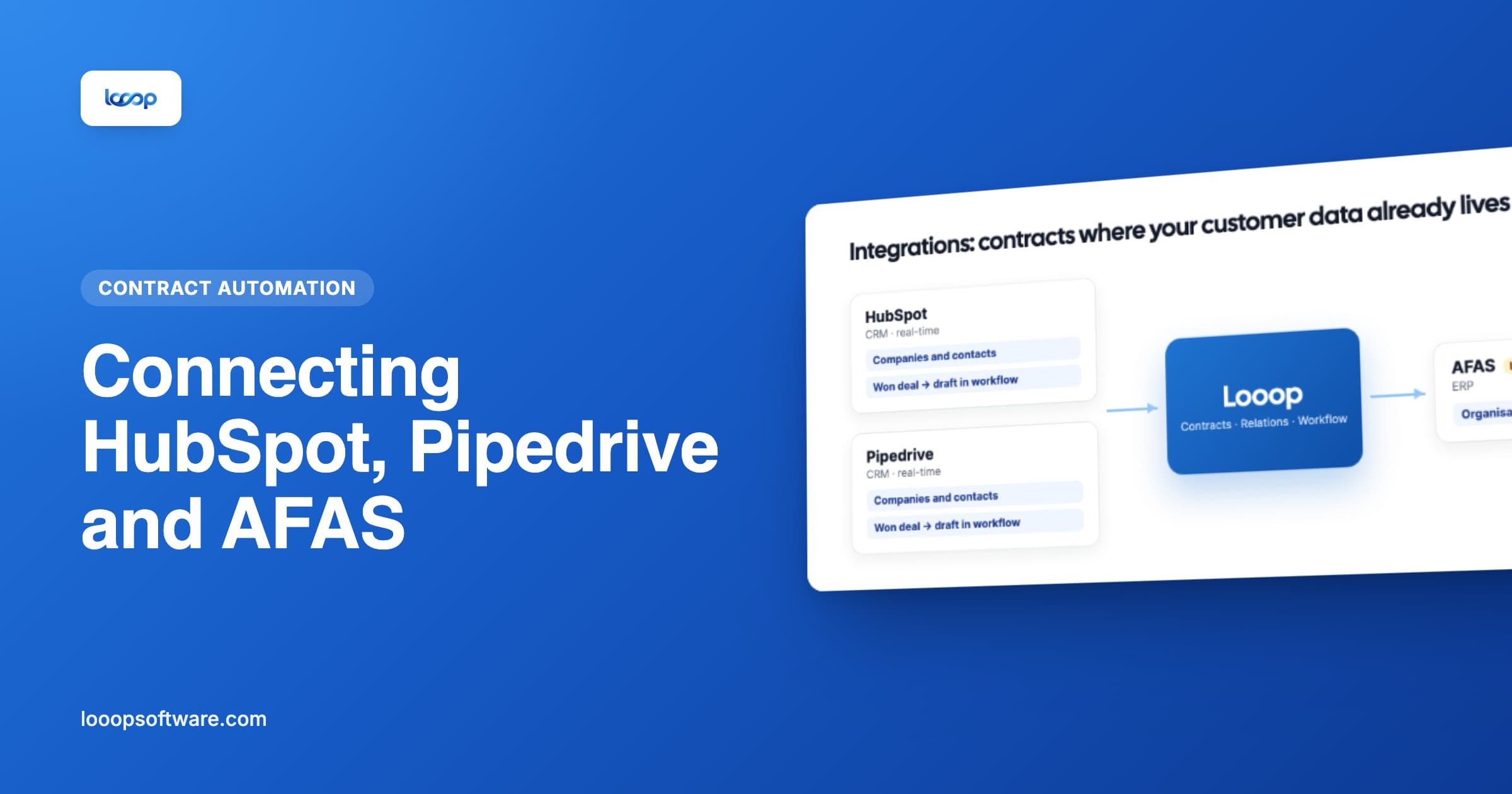
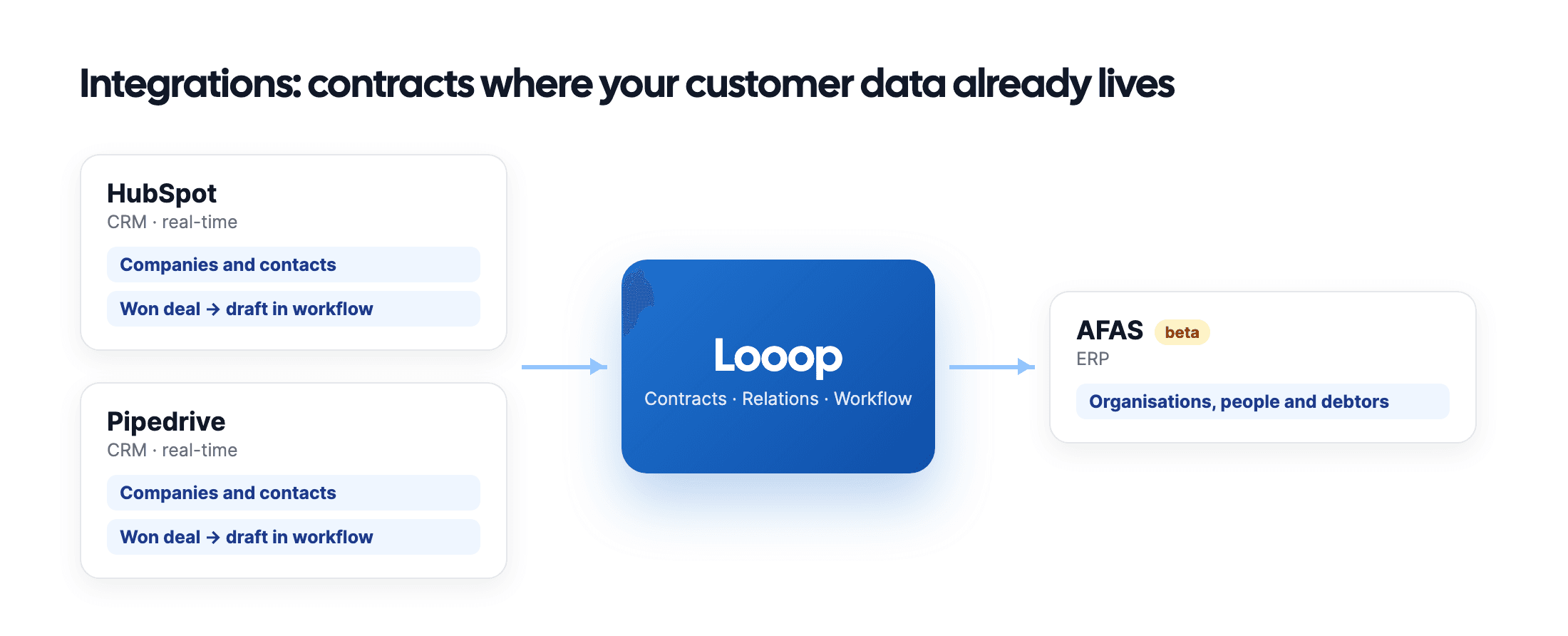
Looop builds integrations with the CRM and ERP systems Dutch businesses actually use, including HubSpot, Pipedrive and AFAS, extending to systems like Exact and Salesforce. You don't need to re-enter your relations and contacts, they flow automatically from your CRM into the contract.
What Looop adds to your existing stack
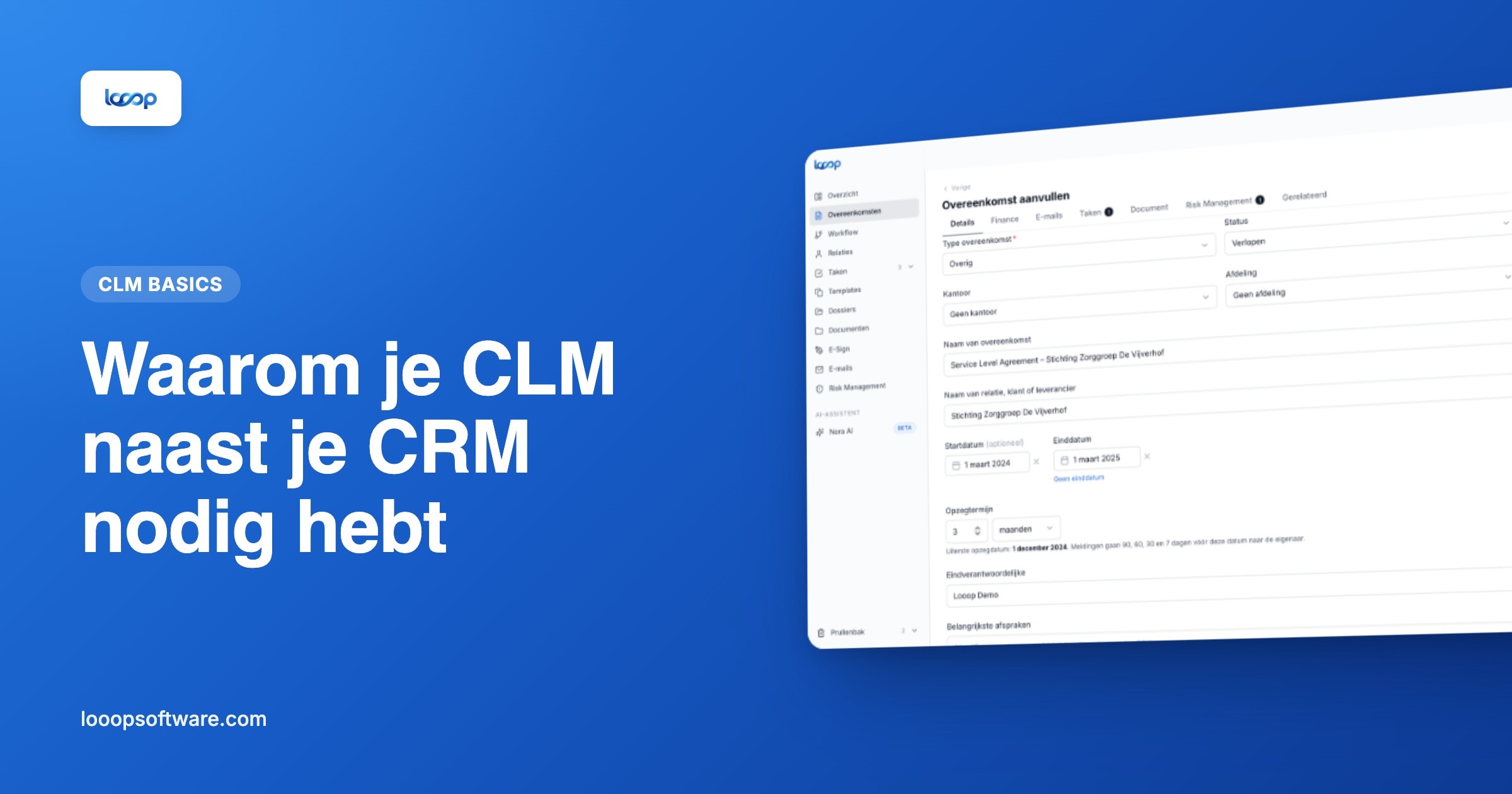
- NORA AI reads your contracts for you, parties, terms, notice periods and obligations are recognised automatically, something no CRM can do out of the box
- Automatic expiry alerts at 90, 60 and 30 days before the deadline, to the right contract owner
- Automatic tasks for expiring contracts, so renewing or terminating never happens at the last minute again
- Digital signing directly from the same system, no printing, scanning or separate tools
- One central, searchable contract repository, no more folders, no more email threads
Conclusion
Your CRM and your CLM aren't competitors, they're two tools for two different phases of the same customer relationship. A CRM brings the deal in. Looop makes sure what you agreed to is actually honoured, monitored, and renewed on time, as a smart addition to the tools you already use, not a replacement for them.
Curious how Looop works alongside your HubSpot, Pipedrive, AFAS or other CRM? How the integrations work is explained in connecting contract management to HubSpot, Pipedrive and AFAS.
Frequently asked questions
- Why do you need a CLM system alongside your CRM?
- A CRM manages relationships and the sales pipeline until the deal is won. After that it doesn't track notice periods, read contracts or create tasks at expiry. A CLM system takes over from the contract onwards.
- Can you connect Looop to your CRM?
- Yes. HubSpot and Pipedrive sync companies and contacts as relations, and a won deal automatically starts a draft workflow that eventually becomes a contract. With AFAS, Looop creates organisations and debtors in your ERP; we configure that sync together with each customer. The integrations are part of the Enterprise plan.
- Do I need to replace my CRM?
- No. Your CRM stays the source for customer relationships and the pipeline; contract management handles everything about the contract itself: drafting, signing, monitoring and renewal.